Research
The Notre Dame Sensor Initiative (NDSI) unites researchers from across the University of Notre Dame to create precise, rapid, and low-cost tests for emerging threats.
Explore publications from the Notre Dame Sensor Initiative

Collaborators at Notre Dame Serving Community Analytical Needs (ND-SCAN) will develop sensor technologies that healthcare providers, law enforcement, and harm reduction groups can use in the field to quickly and accurately identify high-potency synthetic opioids, cannabinoids, and other psychoactive substances in complex mixtures. These technologies will give caregivers, emergency responders, and health departments across Indiana and neighboring states critical information they need to address new substances infiltrating local illicit drug supplies.
Learn more about how Notre Dame is fighting to combat the opioid crisis in an edition of the “What Would You Fight For?” video series.
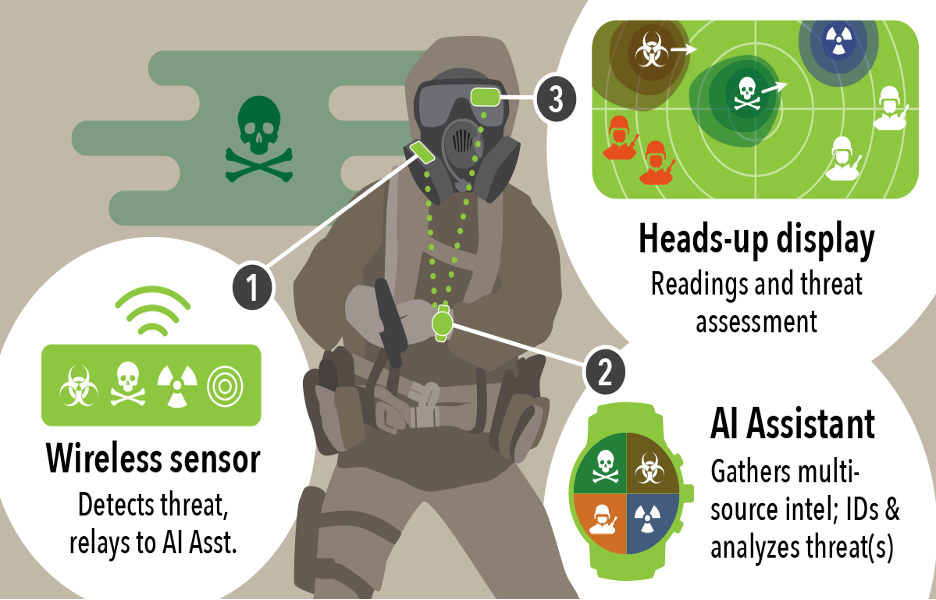
NDSI will also focus on developing dual-use sensor technologies for resilience to emerging chemical and bio threats. These technologies can simultaneously be applied to problems in the personalized healthcare space and national security. The illustration below shows this process.